
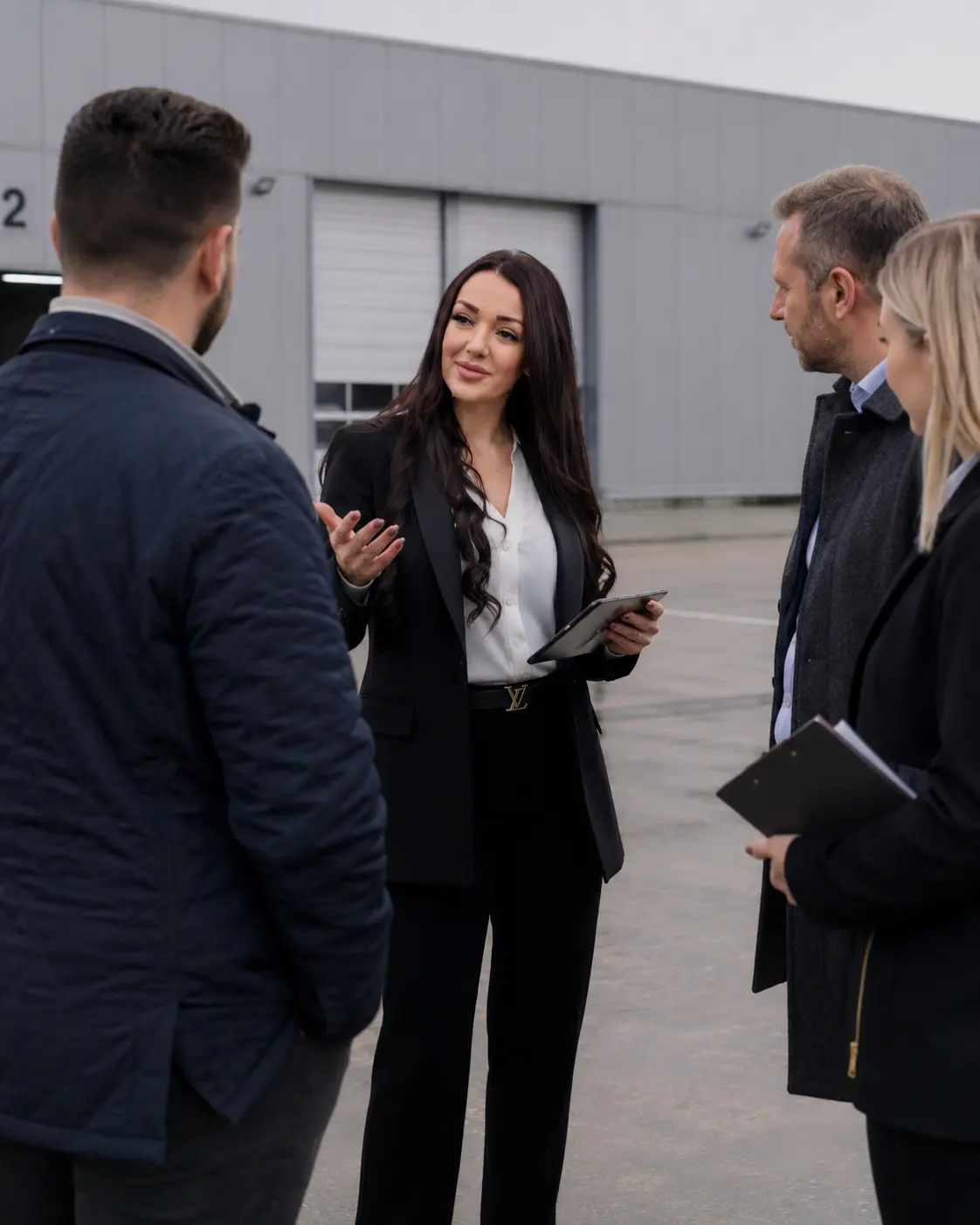
Talk about production cooperation requires data, not a general presentation. Find out how to describe capabilities, prepare samples, and establish the rules of execution.
The Polish-Dutch production cooperation begins much earlier than with the first order. The Dutch partner wants to understand what the Polish producer can do, in what timeframe, under what constraints, and how they control the result. A general presentation of the company, a list of machines, and assurances of flexibility are usually not enough.
A well-prepared manufacturer is able to translate its capabilities into parameters important to the buyer: tolerances, minimum quantities, actual capacities, the method of approving changes, the traceability of batches, and the response time to deviations. This material makes it easier to assess the fit and shortens the path to a sample or test series.
Production capacity profile instead of a catalog of machines
The capability profile should answer the question: what orders can the company repeat consistently? The machine park itself does not provide this answer. Two companies with similar equipment may differ in the level of automation, team competencies, process control, and the availability of changes.
In a short profile it is worth mentioning:
- the scope of processes performed in-house and operations commissioned to subcontractors;
- supported materials, typical dimensions, tolerances and level of complexity;
- the minimum and economically justified size of the batch;
- the method of planning production, process control and batch identification;
- the possibility of preparing a prototype, samples, and starting repetitive production;
- working languages and the person responsible for technical contact.
The data should be precise but not overloaded. The technical details can be provided after receiving the request and after agreeing on confidentiality rules. If the company is just choosing a model of cooperation, an article about what distinguishes it will be helpful. distributor, representation and networking in the Netherlands. A production partner requires a different qualification process than a trading partner.
Production capacities and deadlines: figures with conditions
The „we have free capacities” declaration is too broad. The partner needs numbers, units, and a time horizon. Availability for trials, the expected date of the first batch, and the possible output after the process stabilizes should be provided. It is worth separating the nominal capacities from the capacities that can actually be allocated to a new client.
An example message might indicate: current workload, number of changes, typical turnaround time, material constraints, and the nearest available production window. If the deadline depends on the approval of documentation or the delivery of a component, this should be stated immediately. A reliable schedule also takes quality control, packaging, and transportation into account, not just the machine’s operating time.
Before the meeting, it is a good idea to prepare three volume scenarios: a test series, the assumed monthly level, and a variant of increased demand. Each should have a separate deadline and a list of conditions.
Quality and certificates without promises without coverage
The partner may ask about the quality management system, audits, personnel qualifications, the calibration of measuring equipment, or material certificates. The answer should describe the factual situation: the documents in possession, their scope, the issuer, and the expiration date. It should not suggest that the product complies with the requirements unless it has been tested for the specific application.
The useful package includes copies of current certificates, an example inspection plan, a sample measurement report, and a description of the procedure to be followed in the event of a non-compliant product. If a specific test is performed by an external laboratory, this must be indicated. The system certificate does not replace the product specification agreement.
In a conversation, it is important to separate technical capabilities from formal approval. A manufacturer may be capable of producing an element, but still require additional testing, process qualification, or customer acceptance. The scope of such requirements is determined for a specific project.
The sample and test series should have an acceptance plan
The sample serves to verify the assumptions, not just to showcase the aesthetics of the execution. Before preparing it, both parties should agree on the drawing version, material, critical parameters, measurement method, and acceptance criteria. It is advisable to include the sample identifier and the results report in the shipment.
After approval of a single lot, a test series is often required. This allows for the evaluation of repeatability, operation times, material losses, packaging, and the delivery process. The findings should include:
- the number of pieces and the price of the series;
- the documentation applicable during production;
- scope of control and format of the report;
- a person approving the result on each side;
- the rules of action after a positive or negative result.
A failed attempt does not have to end the conversation. It is important to know whether the cause was an unclear specification, material, process setup, or a mistake in execution. The next iteration should be based on the recorded analysis, not on verbal assumptions.
Technical documentation and change management
Before pricing, it is necessary to determine which files are the most important: the drawing, the model, the material specifications, the list of components, or the requirements for inspection. Each document should have a version number and a date. It is also worth determining the file format, the description language, and a secure channel for transmitting them.
A technical change requires a separate record. The manufacturer should not independently replace material, process, or a subcontractor without a defined approval path. In turn, the ordering party should deliver the new version so that it does not only reach the merchant, but also the planning, production, and quality departments.
An example documentation package devoid of data from another client is useful for the first meeting. It demonstrates the standard of work without revealing anyone else's intellectual property.
Tools, tooling and intellectual property
If the implementation requires a form, device, program, dedicated holder, or workstation, the price discussion must separate the cost of the tool from the unit price. It is necessary to describe who finances the execution, where the tool will be stored, who is responsible for maintenance, and how it will be recorded in the records.
The rules for accessing the tool, using it for other recipients, modifications, and returns after the end of the cooperation remain to be determined. Design files, programs, and improvements developed during implementation require similar precision. This article is of a business and organizational nature and does not constitute legal advice. Ownership, confidentiality, and liability issues should be discussed with the appropriate specialist.
Logistics and Incoterms: the name of the rule is not enough
In the calculation, you need to specify the packaging unit, the dimensions and weight of the shipment, the protection of the goods, the frequency of pickups, and the required transport documents. It is worth checking whether the partner expects deliveries to one warehouse, to a construction site, to a logistics operator, or according to the schedule of shipments.
The Incoterms rule should include the name, the exact location, and the version, for example Incoterms® 2020. The official Dutch portal Business.gov.nl explains that the Incoterms® rules regulate the arrangements between the seller and the buyer regarding transport, costs, and liability for damage or loss of goods.[1] However, they do not specify all the terms of the production cooperation; therefore, it is necessary to determine, among other things, the quality acceptance, the payment term, and the complaint procedure separately.
The rule should not be chosen solely because it was used with a previous client. The place of risk transfer, the organization of the transport, and the insurance options must fit the actual supply chain.
Complaints: establish a procedure before the first delivery
The complaint procedure should indicate the reporting channel, the required data, the deadline for confirming receipt, and the method of securing the suspected batch. Partners should know who makes the decision regarding sorting, repair, delivery of a replacement, or return.
The manufacturer needs the batch number, a description of the defect, photos, and information about the conditions under which the problem was detected. In turn, the recipient should receive quick information about the immediate actions, and later an analysis of the cause and a plan for preventing a recurrence. Costs and liability require separate contractual arrangements.
Scaling without losing control over the process
After a successful test series, it is not advisable to declare any volume immediately. Scaling may require a second change, additional equipment, a stock of material, or approval from another supplier. Any growth threshold should have launch conditions and a deadline.
A good practice is to review after the first few deliveries: timeliness, the results of the inspection, complaints, completeness of documents, and the actual cost of service. Such a review shows whether it is possible to increase orders without compromising quality. A broader context of the organization’s preparation is described in the article about Mistakes made by Polish companies during their first conversations in the Netherlands.
What should I prepare for a conversation with my Dutch partner?
The minimum package should include a capability profile, a power table and deadlines, a list of current certificates, an example quality report, a description of the testing process, and logistical assumptions. It is worth adding a list of questions regarding volume, documentation, approval of changes, and complaints.
The very format of the conversation is also important. The agenda sent in advance allows you to invite representatives from the purchasing, technical, quality, and logistics departments of the partner company. Specific instructions on how to prepare the meeting are included in the text. first conversation with a partner in the Netherlands.
FAQ
How can one describe the production capabilities of the Dutch partner?
The realistically available performance in a specific unit and time must be provided; the nearest production window, the number of changes, and any limitations must be shown separately. It is also worth showing the capacities for the test series and repetitive production.
Do I need to send samples before receiving the order?
It depends on the project, but a sample often reduces the risk on both sides. It should be created based on the approved version of the documentation and have the accepted criteria specified. The cost, deadline, and purpose of the sample must be agreed upon before execution.
Which Incoterms rule should be chosen in the Polish-Dutch cooperation?
There is no one rule that applies to every shipment. The choice depends on the type of transport, the place of delivery, the cost sharing and the organizational capabilities of the parties. The rule must be recorded with the exact location and the Incoterms® version indicated.
When can we move from the test series to regular production?
After meeting the agreed quality and logistical criteria and the result being approved by the appropriate persons. Before increasing the volume, it is necessary to confirm the availability of materials, personnel, machinery, and process control.
Conversation prepared at the operational level
If a company is considering production cooperation in the Netherlands, it is worth organizing the data before contacting them and checking what is missing for a meaningful conversation. Barbara Śmietana supports Polish companies in preparing B2B communication, reaching the right partners, and conducting conversations, taking into account the Dutch business context. The contact can serve to assess the company’s readiness and determine subsequent actions.
Sources
[1] Business.gov.nl, „Using Incoterms® transport conditions”